New residential heat pumps use refrigerants such as R-454B or R-32 because the EPA limits refrigerant in new systems to a global warming potential below 700, a limit R-410A does not meet. For a homeowner, the change shows up at installation: the indoor coil must match the new refrigerant, old line sets are checked rather than assumed reusable, and some indoor units carry leak detection.
Tule Sacramento Heat Pump installs and replaces ducted heat pumps across the Sacramento region, with licensed and insured contractors handling the refrigerant work. This guide explains what changed and what it means for an existing R-410A system.
What the rule changed
The EPA’s Technology Transitions rule restricts high-GWP refrigerants in new equipment by sector. For residential and light commercial air conditioning and heat pump systems, the limit is a GWP below 700, with an installation compliance date of January 1, 2025 for new systems. The EPA’s later reconsideration rule set no installation compliance date for systems whose components were all manufactured or imported before that date.
Why R-410A is out for new systems
GWP compares a gas’s warming effect with carbon dioxide’s. R-410A sits far above 700. R-454B and R-32 sit below it, which is why manufacturers moved their residential lines to them.
What it does not change
The rule governs new systems. An existing R-410A heat pump can keep running and be serviced. Nothing requires it to be replaced because of its refrigerant.
What A2L means
Refrigerants are classed by toxicity and flammability. R-454B and R-32 fall in the A2L class: lower toxicity and mildly flammable, a step from the nonflammable A1 class R-410A belonged to.
Safeguards in the equipment
Because of the flammability class, equipment and installation standards add safeguards. Some indoor units include a refrigerant leak sensor; when it detects a leak, the system responds, for example by running the blower to disperse the refrigerant. Manufacturers set the requirements for each model, including limits tied to the size of the space the equipment serves.
Safeguards in the installation
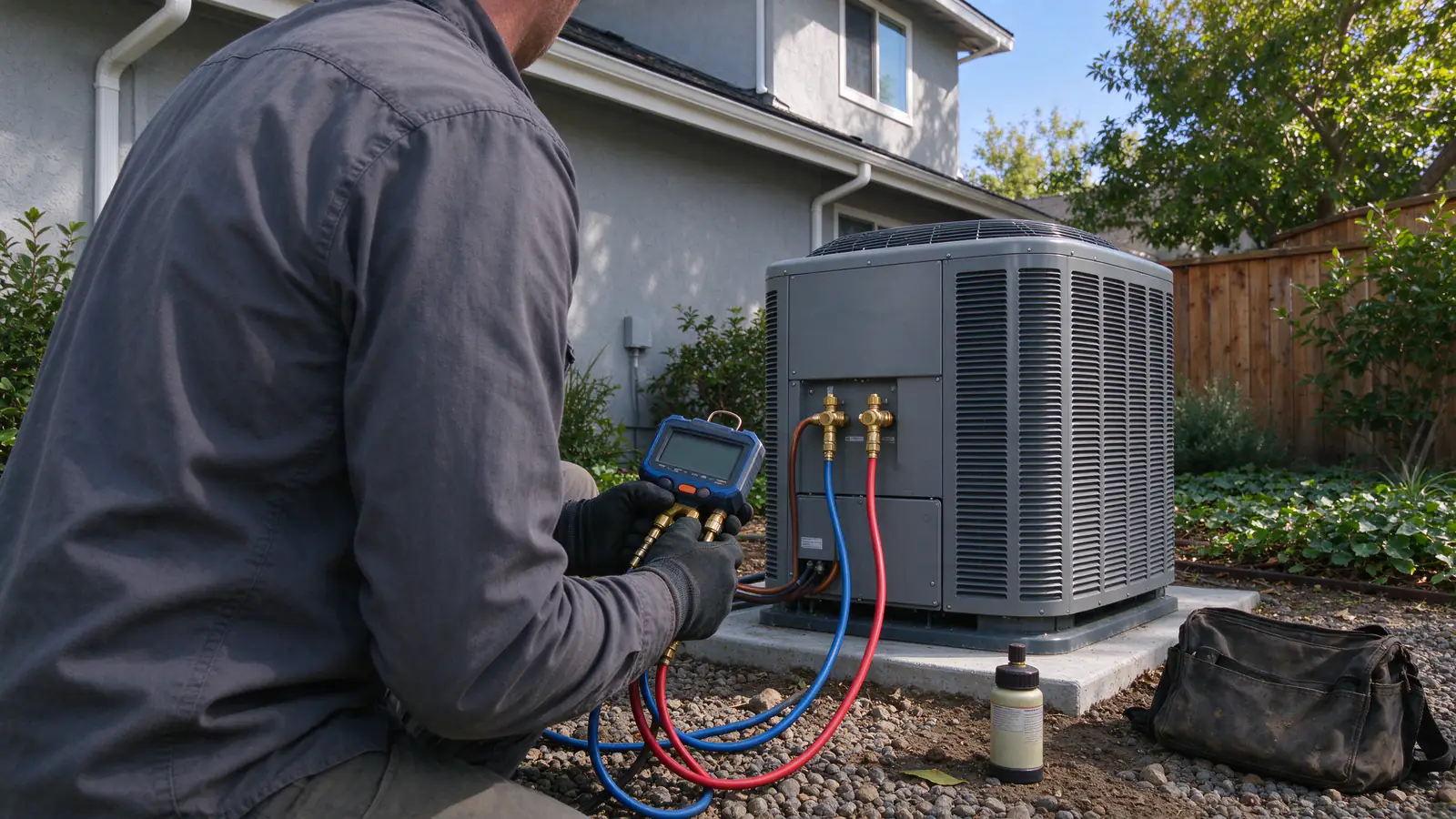
The basics matter more than ever: brazed or flared joints made to the manufacturer’s method, a nitrogen pressure test, deep evacuation with a vacuum pump confirmed on a micron gauge, and a charge weighed in and then verified. Title 24 already requires refrigerant charge verification for heat pumps in every climate zone, with an ECC-Rater confirming it.
The matched indoor coil
A heat pump’s rating, capacity and safety listing belong to a matched outdoor and indoor pair. With the refrigerant change, that matters twice over.
Why an old coil will not do
An indoor coil built for R-410A has a metering device and design for that refrigerant, and it lacks any leak detection an A2L system may require. A new A2L outdoor unit needs an indoor coil or air handler listed for the same refrigerant. In a conversion where a coil sat on the furnace, or an older air handler is in the attic, the indoor side usually changes too.
Heat pump air handler replacement covers when the indoor unit must change and how its location affects the work. The ratings for each matched pair are explained in the SEER2 and HSPF2 guide.
Reusing the line set
The two copper lines between the outdoor unit and the indoor coil are sometimes reusable and sometimes not.
| What gets checked | Why it matters |
|---|---|
| Line size | The new unit’s instructions specify diameters for its capacity and run length |
| Condition | Kinks, crushed insulation, corrosion or old repairs can leak or restrict flow |
| Cleanliness | Contaminants, moisture or oil left from a failed compressor can damage new equipment |
| Route and length | Attic, wall or slab routes affect whether replacement is practical |
| Insulation | Degraded insulation wastes capacity and sweats in summer |
Reuse is a decision made after inspection, flushing where appropriate and a pressure test, not a default. Replacing lines that run through finished walls or under a slab costs more, which is one of the drivers explained in the replacement cost guide.
Conversions and replacements differ
Furnace and AC to heat pump
In a conversion, the old AC coil on top of the furnace was built for the old refrigerant, and the furnace cabinet usually leaves with it. A new air handler listed for the A2L refrigerant takes its place, so the matching question answers itself. The line set is the open item.
Heat pump to heat pump
In a replacement, the indoor air handler may look serviceable, but if it was built for R-410A it cannot be paired with a new A2L outdoor unit. Budget for both halves of the system, and treat a quote that changes only the outdoor unit as one to question.
Older R-410A systems: repair or replace
If your heat pump runs on R-410A, the question comes up when it needs a significant repair.
When repair still makes sense
A younger system with a fixable fault, such as a failed capacitor, a fan motor or a small accessible leak, can be repaired and recharged. Heat pump repair covers how diagnosis works.
When replacement deserves a look
A compressor failure, a coil leak in an older system or repeated refrigerant top-ups shift the math. A repair keeps an R-410A system running, but the refrigerant’s future cost is set by the market and cannot be promised. The lifespan guide covers the age and condition questions, and heat pump replacement the replacement scope.
Leftover stock
Because systems built entirely before 2025 have no installation deadline, some bids may offer R-410A equipment. It can be legal to install, but its future service depends on R-410A supply. Ask which refrigerant a quoted system uses and what that means for repairs.
How the change shows up in a quote
A complete quote names the refrigerant, lists the matched indoor and outdoor model numbers, says whether the line set is reused or replaced and why, and notes any leak detection the indoor unit requires.
Trade reports describe A2L systems as costing more than the R-410A equipment they replaced, though no government price index tracks it; treat it as one driver among several. The quote comparison guide has the full checklist, and the installation process guide shows where pressure testing and evacuation happen. To plan a replacement, call (916) 516-1454 or request an estimate.