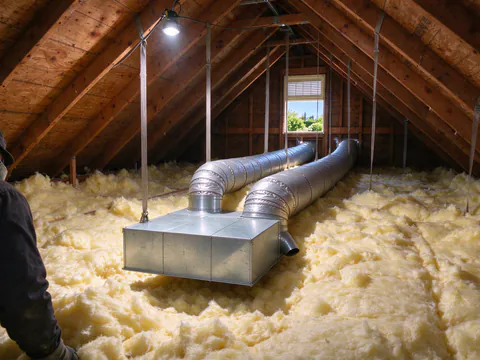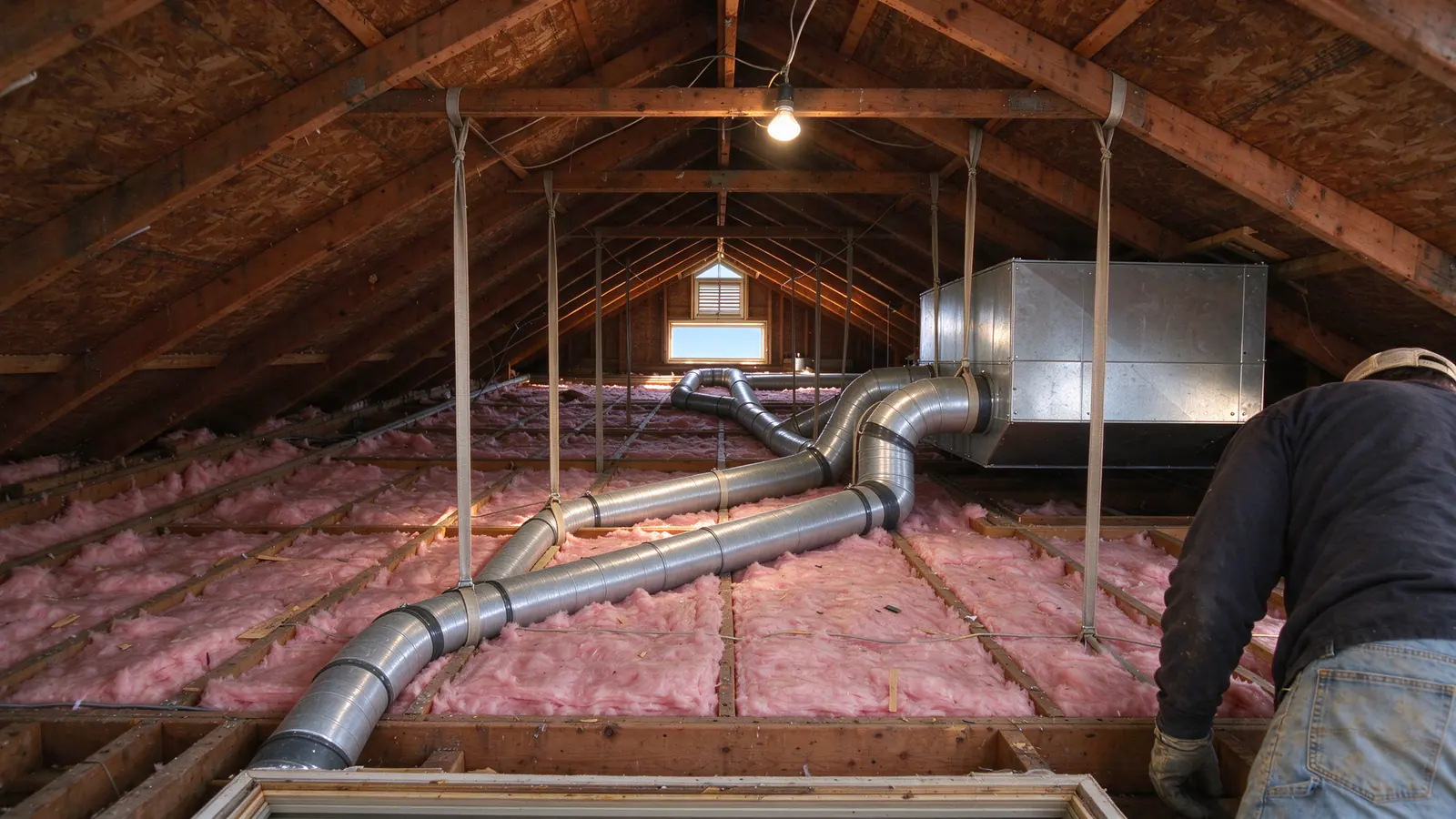
For most Sacramento houses that already have central air, a ducted heat pump is the more natural fit. It reuses the duct system, puts one indoor unit and one outdoor unit where the old furnace and condenser were, and keeps the whole house on one filter and one thermostat. Ductless mini splits suit rooms the ducts never reached. The test is whether your ducts can carry heat pump airflow.
Tule Sacramento Heat Pump plans and installs ducted heat pumps across the Sacramento region, with the work carried out by licensed and insured contractors. Ductless mini splits are a separate trade and are not offered through this site, so this guide compares them plainly without selling either one.
Two ways to deliver the same heat
Both systems are heat pumps. The outdoor unit, compressor, reversing valve and refrigerant loop work the same way. The difference is what happens indoors.
Ducted
A single air handler, or a coil on a furnace cabinet, sits in the attic, garage or a hall closet. Its blower pushes air across the indoor coil and out through supply ducts to registers in every room, then pulls it back through one or more return grilles. One thermostat runs the system, and one filter at the return cleans all the air the house circulates.
Ductless
Each conditioned room gets its own indoor head, usually high on a wall, with a small fan and coil inside. A refrigerant line set, a condensate line and a control cable run from each head to the outdoor unit. There are no ducts, so nothing is lost through an attic, but each head controls only the room it hangs in.
The two side by side
| Ducted heat pump | Ductless mini split | |
|---|---|---|
| Indoor equipment | One air handler or furnace coil, out of sight | A head in each room, visible on the wall or ceiling |
| How air reaches rooms | Supply and return ducts | Directly from the head into the room |
| Filtration | One central filter, which can be upgraded | A washable screen in each head |
| Control | Usually one zone and one thermostat | Each head runs as its own zone |
| Energy lost on the way | Duct leakage and heat gain in a hot attic | No duct losses |
| Title 24 on a change-out | Duct sealing plus ECC-Rater testing | No duct test where no ducts are connected |
| Condensate | One drain at the air handler | A drain line from every head |
| Best fit | Houses with ducts that test well or can be sealed | Rooms or houses without ducts |
What the local housing stock points to
Most Sacramento homes already have the ducts. In the California Energy Commission’s 2019 residential appliance survey, about 89% of SMUD households had central air conditioning and 79% had a furnace fan, which means a forced-air duct system. In PG&E’s territory the figures were 51% and 65%. Single-family homes in SMUD’s forecasting zone ran higher still, at 93% with central air.
City of Sacramento permit records show what happens at change-out time. Of 1,950 heat pump HVAC permits issued from October 26, 2025 to October 25, 2026, 1,167 carried the standard “No Duct Work Permitted” condition and 176 were written as change-outs with new ducts. The common case is a heat pump on the existing ducts.
Where ducts may be missing or marginal
Some neighborhoods have far older housing. In ZIP 95818 around Land Park and Curtis Park, about 66% of housing units were built before 1950, and in 95819 in East Sacramento about 78% predate 1960. A pre-war house may have original ducts sized for a gravity furnace, a later system with ducts added in a tight attic, or rooms an addition left unserved. The older homes page covers those cases.
When the existing ducts decide it
A heat pump’s supply air is milder than a furnace’s, so it needs to move more air to deliver the same heat. Title 24 refrigerant charge verification assumes at least 300 cfm for each ton of capacity. Ducts that were fine behind a furnace can fall short.
What the duct test checks
On a change-out, the installer seals the connected ducts and an ECC-Rater tests them. The California Energy Commission’s target is total leakage at or under 10%, or leakage to the outside at or under 7%. Ducts that cannot reach it pass once every accessible leak is sealed and confirmed visually and with smoke. The permit and Title 24 guide explains the whole sequence.
When the ducts fall short
- Small returns. A return grille sized for an old furnace can choke a heat pump. Enlarging it or adding a second return is often the fix.
- Crushed or kinked flex. Runs pinched over joists starve the rooms at the end. Re-hanging or replacing those runs restores flow.
- Ducts past saving. New runs adding up to more than 25 feet need R-8 insulation and their own leakage test, and an all-new system has to test at 5% or less.
Heat pump ductwork covers the repair and replacement options, and the sizing guide explains how airflow and capacity are matched.
What the cost data shows
SMUD publishes median installed costs from its heat pump rebate program, refreshed every quarter. Its gas-to-electric medians, before rebates, break down like this:
| System type (SMUD program category) | Median installed cost |
|---|---|
| Split system (ducted) | About $18,800 |
| Package unit (ducted) | About $19,550 |
| Ducted mini split | About $21,400 |
| Ductless mini split | About $15,000 |
The ductless figure looks lower, but the jobs behind it vary from a single room to a whole house, while a ducted conversion conditions every room and carries the duct sealing and testing. A fair comparison prices the same rooms to the same comfort standard. The Sacramento cost guide breaks a ducted price into its parts.
Where a ductless system fits better
Ductless makes sense where there is nothing to connect to, or where adding ducts would cost more than heads would:
- an addition or converted garage the original ducts never reached
- a house with no attic or crawlspace room for ducts
- a single room that runs hot or cold while the rest of the house is fine
- a house that heats with wall or baseboard electric heaters and has no forced-air system at all
A house with sound ducts and a central system to replace rarely benefits from tearing them out.
Comfort, air and sound
A ducted system mixes air through the whole house, so temperatures even out between rooms when the ducts are balanced, and one central filter handles smoke and dust. That filter is a real advantage during wildfire season, as the wildfire smoke guide explains.
Ductless heads give each room its own setting and avoid attic duct losses, but the fan runs inside the room, and each head needs regular cleaning. With a ducted system, the blower sits away from living spaces, and the outdoor unit is the main source of sound in either design.
Making the call for your house
If the house has central air today, start by testing the ducts. The home readiness check flags likely duct and panel issues, and replacing an AC with a heat pump or a full furnace-to-heat-pump conversion keeps the ducts working. To have the ducts measured and a ducted system planned, call (916) 516-1454 or request an estimate.