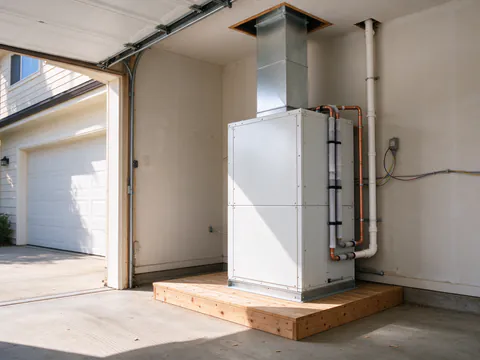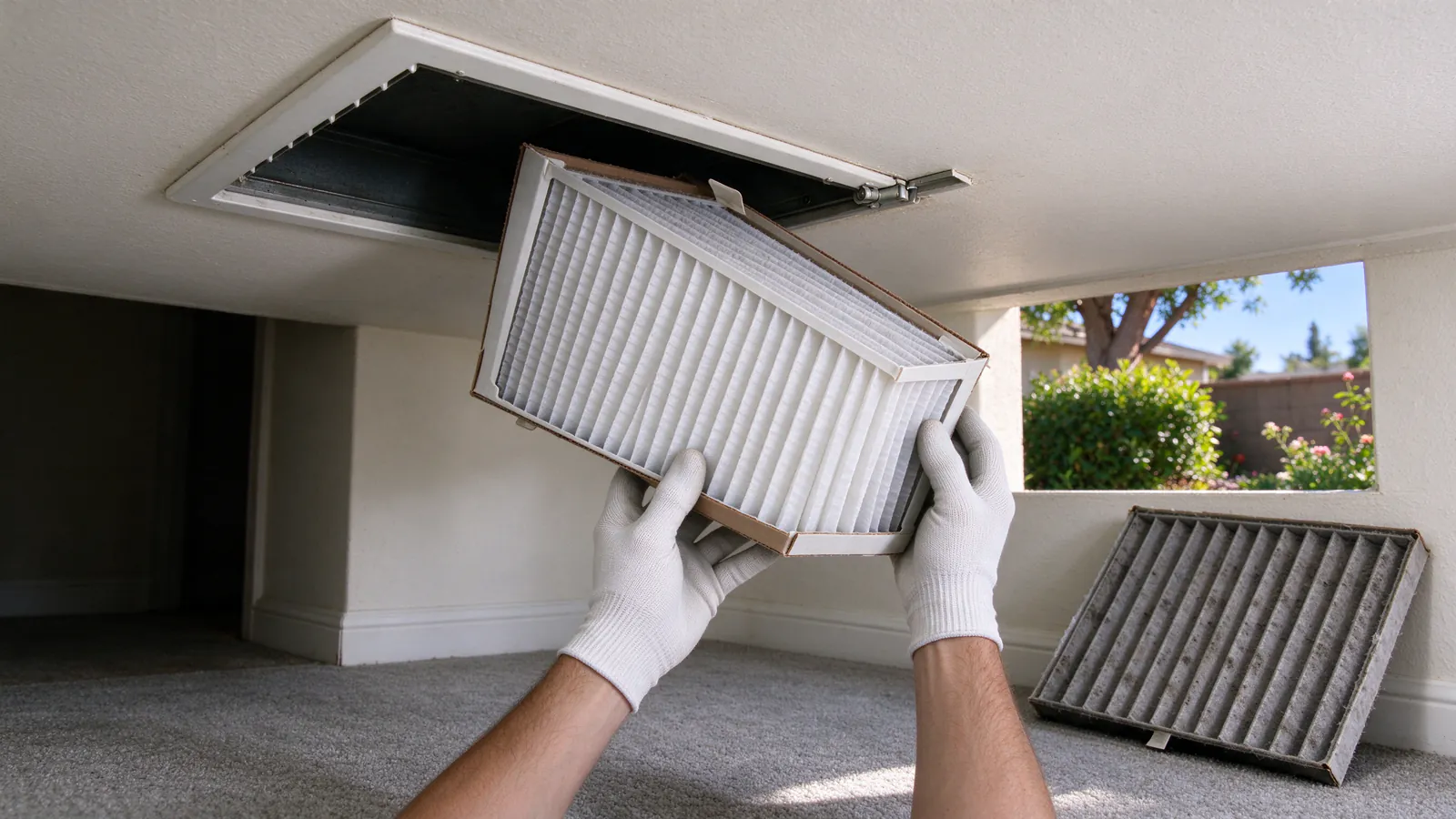
A ducted heat pump can help, mainly because it recirculates and filters the air already inside the house instead of drawing outdoor air in. How much it helps depends on the filter, on how much air the system moves through it, and on whether the ducts leak. On smoke days the settings matter as well: windows closed, outdoor-air devices off, and the fan running.
Tule Sacramento Heat Pump installs ducted heat pumps and replaces air handlers across the Sacramento region, through licensed and insured contractors. This guide explains the mechanisms without guessing at numbers, because filtration results depend on each house.
How smoke gets into a house
Fine smoke particles ride in on air. A house exchanges air with the outdoors through:
- open windows and doors
- gaps around doors, windows, recessed lights and attic hatches
- kitchen and bath exhaust fans, which pull replacement air in through those gaps
- whole-house fans and evaporative coolers, which deliberately blow outdoor air through the house
- return ducts in an attic or garage that leak, pulling in air from those spaces
A ducted heat pump is not on that list. Its outdoor unit trades heat with outdoor air through a sealed refrigerant loop, and no outside air crosses into the duct system.
Why recirculation helps
The indoor blower pulls house air through the return grille and filter, across the indoor coil and back out the supply registers. Every pass through a good filter removes part of the fine particles. The more air that passes, the faster indoor levels drop, which is why fan time matters as much as filter quality.
Compared with an evaporative cooler
An evaporative cooler works by pulling outdoor air across wet pads and pushing it through the house, so on a smoky day it brings the smoke in with it. About 13% of SMUD households had one in the California Energy Commission’s 2019 survey. The heat pump vs swamp cooler guide compares the two.
Compared with ductless heads
A ductless head has a fine screen that catches dust but not much fine smoke, and each room’s head treats only that room. The central filter in a ducted system is a real advantage here; the ducted vs ductless guide covers the rest of the comparison.
The filter tradeoff
Rating
MERV is the common scale for HVAC filters: higher ratings capture smaller particles. Wildfire smoke is mostly very fine particles, so a higher-rated filter catches much more of it than a basic one.
Resistance
Denser media also resists airflow. A heat pump depends on moving enough air: Title 24’s refrigerant charge check assumes at least 300 cfm per ton. Choke the airflow and the system loses capacity, the indoor coil can ice in summer, and in winter the thermostat leans on backup strips. Swapping a dense filter into a slot sized for a thin one can cause all of that.
Surface area is the way around it
A deeper filter, or a larger return with more filter area, spreads the same airflow over more media, so resistance stays low even at a higher rating. That is a physical change to the return or filter cabinet, which is easiest to make when the air handler is replaced. SMUD lists filtration and enlarged returns among the factors that change a heat pump project’s installed cost.
Settings for smoke days
- Close up. Shut windows and doors; turn off the whole-house fan and any evaporative cooler.
- Run the fan. Set the thermostat fan to on rather than auto so air keeps passing through the filter while the heat pump cycles.
- Use exhaust fans briefly. Kitchen and bath fans pull outdoor air in through gaps; use them only as long as needed.
- Check the filter. Smoke loads a filter faster than ordinary dust; change it after a long smoke event.
- Rinse the outdoor coil. Once the air clears, wash ash and debris off the coil gently so it can breathe.
A portable air cleaner in a bedroom can supplement the central system, especially at night when the system fan may be off.
Ducts decide how much air bypasses the filter
Return ducts run under negative pressure, so any leak pulls air in from wherever it passes: a hot, dusty attic or a garage. That air reaches the coil and the rooms without going through the filter.
On every change-out, Title 24 has the installer seal the connected ducts and an ECC-Rater test them, with a target of 10% total leakage or 7% leakage to the outside, and 6% where ducts or equipment sit in a garage. Tighter returns mean more of the house’s air passes the filter. Heat pump ductwork covers sealing and replacement.
What an air handler replacement can fix
When the indoor unit is replaced, the return and filter arrangement is open anyway. That is the time to:
- add a deeper filter cabinet at the air handler or a larger return grille with a deeper filter
- correct an undersized return that limited airflow
- choose a variable-speed blower that can run continuously at low speed with less energy
- seal the return plenum and the connections that leak most
Heat pump air handler replacement explains when the indoor unit needs to change and what else the job involves.
Living with it between smoke seasons
A filter that suits smoke season also suits the rest of the year if the system was designed for it. Check it on a regular schedule, keep plants and fences clear of the outdoor unit, and keep the condensate drain clear. Heat pump maintenance covers a yearly check, and the lifespan guide explains how airflow and filters affect service life. The installation process guide shows where airflow is set during commissioning. To plan filtration with a new system, call (916) 516-1454 or request an estimate.